Two variables decide how a running sock feels more than the logo or the color ever will: how high it sits on the leg, and how much cushion sits under the foot. Height controls protection from friction, debris, and cold; cushion controls the balance between ground feel and impact protection. Neither has a single right answer, because a 5K on the track and a muddy trail ultra ask for opposite things. This guide walks through both choices and how to match them to the kind of running you actually do, whether you are buying a few pairs or specifying a custom run for a team or event.
Height: what each length is for
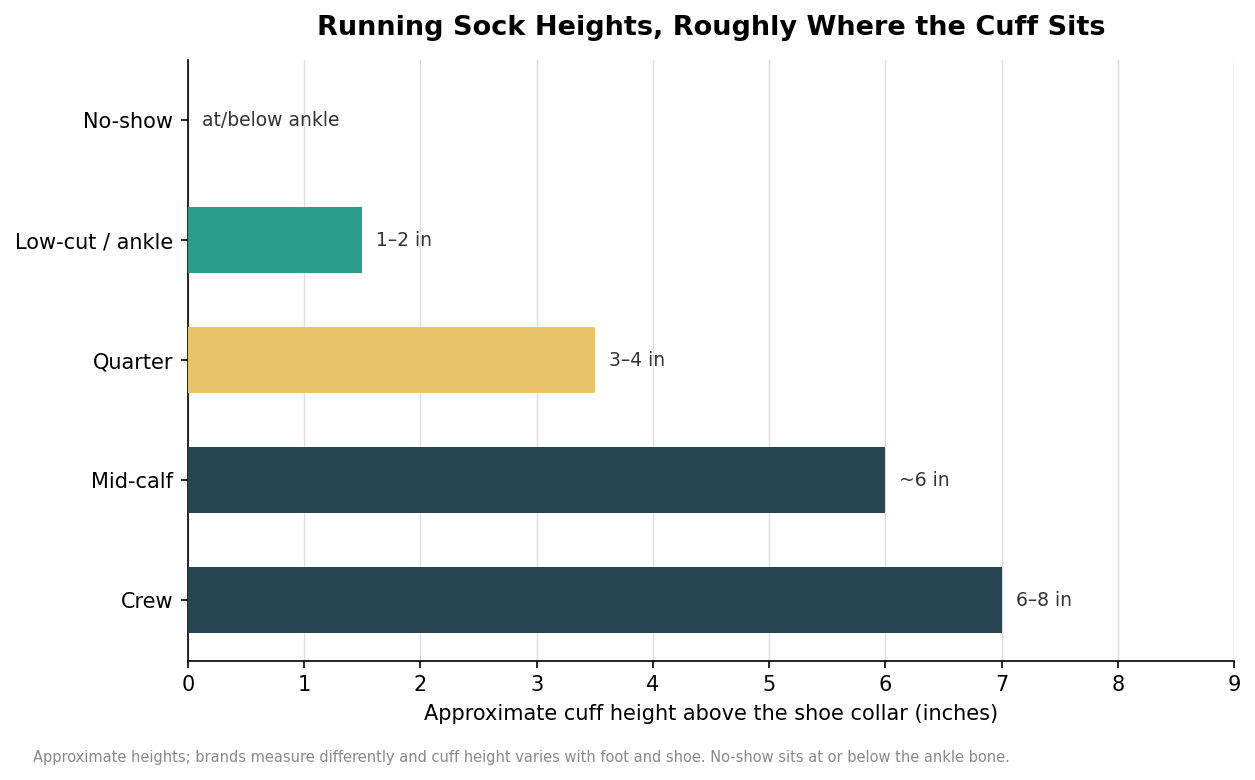
Sock height is usually described by where the cuff lands relative to the ankle. A no-show sits at or below the ankle bone and disappears into the shoe; it is the coolest, most minimal option and a favorite in summer, with the trade-off that it offers almost no protection to the Achilles from the shoe collar. A low-cut or ankle sock rises roughly one to two inches above the collar and is the everyday running default, adding just enough fabric to guard the Achilles against rubbing. A quarter sock reaches about three to four inches up, covering the ankle bone fully, which helps on trails where grit and low brush would otherwise get into a shorter sock.
Above that, a mid-calf sock is a middle-ground height some runners prefer for looks and a little more coverage, and a crew reaches six to eight inches up the lower calf, useful in cold weather, on debris-heavy trails, and as the height most compression and branded team socks use because there is more real estate for a design. Knee-high styles go further still and overlap with graduated compression for recovery and travel. For most road running the choice is really between no-show, ankle, and quarter; height moves up from there as terrain and temperature demand.
Cushion: ground feel versus protection
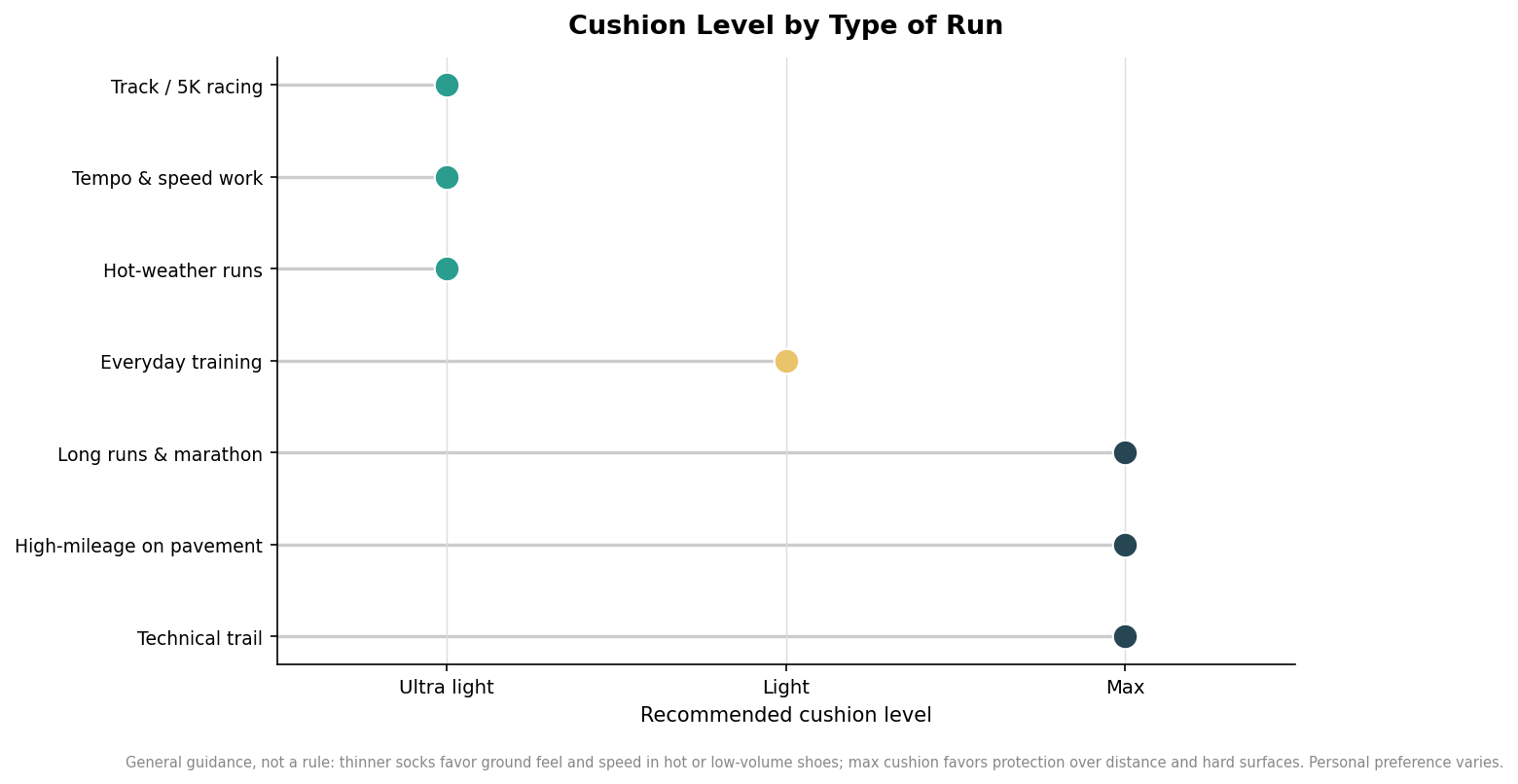
Cushion is knit into the sole and sometimes the whole foot as looped terry, and it is best thought of as a three-step scale. Ultra light cushion is the thinnest; it maximizes ground feel and breathability, fits cleanly into snug or low-volume racing shoes, and suits fast work — track sessions, tempo runs, and racing from the 5K up to the half marathon — especially in heat. Light cushion is the versatile middle: enough padding for daily training and mixed conditions without feeling bulky, and the safe default if you only want one sock for everything. Max cushion is the plushest, and it earns its place on long runs and high mileage, on hard pavement, in winter, on technical trail, and for feet that blister easily, trading some ground feel and breathability for protection and warmth.
One point worth stressing: cushion is not the same as fit or support. A thin sock can still hold the foot firmly and manage pressure well, and a thick one is not automatically more supportive — the fabric structure and how snugly the sock is knit do that work. So choose cushion for the feel and protection you want, and judge fit separately.
Matching height and cushion to your runs
Put the two together and a few clear pairings emerge. For racing and fast training, a low or no-show height with ultra light cushion keeps the foot cool and connected to the ground. For everyday road miles, an ankle or quarter height with light cushion is the reliable all-rounder. For long runs and marathons, keep the ankle-to-quarter height but move up to max cushion, since the extra protection matters most as fatigue and pavement pounding add up. For trail, go quarter or crew for debris protection and pair it with max cushion for the rockier ground. And for cold-weather or recovery running, a taller crew or knee height adds warmth and, in graduated compression versions, can help with the swelling that comes from long days on your feet.
The details that keep the sock working
Height and cushion set the character of the sock, but a handful of construction details decide whether it performs. A seamless or smooth toe closure removes the ridge that rubs the toes raw over distance. An anatomical left-and-right shape and a snug knit keep the sock from sliding, and sliding fabric is what causes most blisters. Moisture-wicking synthetic or wool-blend fibers pull sweat away so the skin stays drier and friction stays low, which matters far more than thickness for blister prevention. When you pick a sock, confirm these are present rather than assuming a cushioned sock automatically has them; a plush sock with a bulky toe seam and a loose fit will still cause trouble.
What this means for a custom order
If you are ordering custom socks for a club, race, or team, the same two decisions drive the spec. Pick a height that fits how the group runs — ankle or quarter covers most road runners, crew if the design needs room or the wearers are on trails — and choose a cushion level to match, leaning to light for a do-everything sock and max if the socks are aimed at long-distance or trail use. Both choices affect the knit: more cushion and greater height use more yarn and knitting time, which nudges the unit cost and can shift where the minimum order lands. Decide height and cushion before you finalize the artwork, because they define the canvas your logo is knitted into and, more importantly, whether people actually want to run in the socks you made.