Custom Running Sock Order Mistakes: What Goes Wrong on a First Order
The biggest mistakes on a first order of custom running socks are picking a style for looks, sending a logo too detailed to knit, guessing sizes, approving the mockup in a hurry and starting too late. Customized Running Socks sends a free mockup within 24 hours with unlimited revisions, so every one of these is easy to fix before a single pair is knitted.
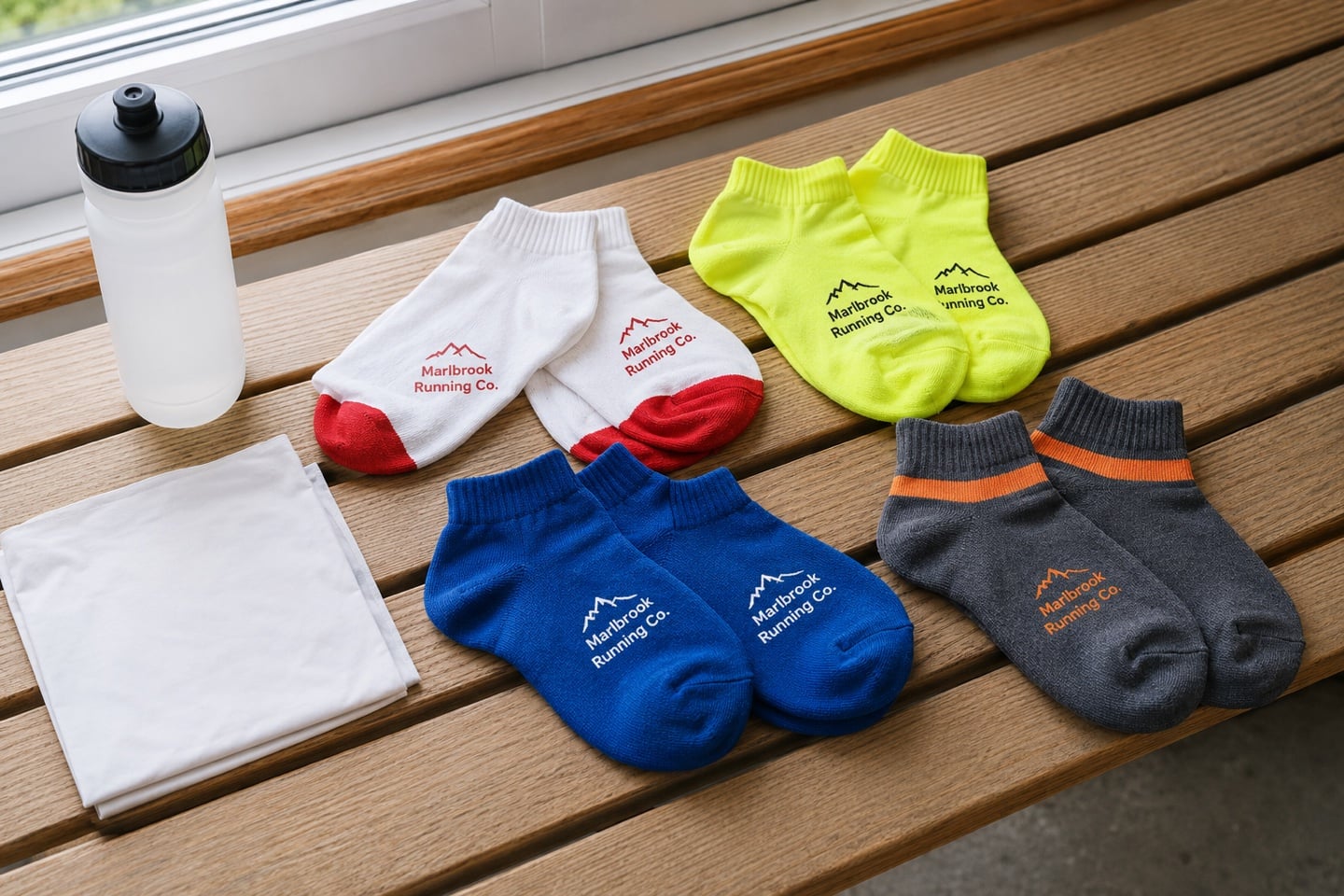
- Match sock height and cushion to how your group runs
- Bold, simple logos knit cleaner than fine detail
- Free mockup within 24 hours, unlimited free revisions
- Minimum order is 12 pairs; about 2 weeks after approval
- Pay nothing until you approve the design
What are the most common mistakes on a first custom running sock order?
The most common mistakes on a first custom running sock order are choosing a style for how it looks instead of how people run, sending a logo with detail too fine to knit, guessing sizes, approving the mockup too quickly and starting too late. None of them are expensive to avoid. Each one simply needs a decision made before you request the quote rather than after the socks arrive.
First-time buyers tend to treat running socks like a printed T-shirt: pick a color, drop on the logo, choose a quantity. A running sock is closer to a piece of gear. Height, cushion, fiber and fit all decide whether the pair gets worn on long runs or ends up in a drawer. Customized Running Socks knits the logo into the sock itself, so artwork choices behave differently than they would on fabric printing.
The sections below walk through each mistake, why it happens, and the simple fix. Use them as a pre-flight check before you fill in the custom quote form.
Why is choosing a running sock style by looks alone a mistake?
Choosing a running sock style by looks alone is a mistake because the wrong height or cushion turns a branded gift into a pair nobody trains in. A no-show sock that looks sleek on a mockup can slip under the heel of a high-collar shoe, and a thick cushioned sock can crowd a snug racing flat. Match the style to the running your group actually does.
Start with the terrain and distance, then pick the style:
| Group runs mostly | Style that usually fits | Why |
|---|---|---|
| Road training and everyday miles | Quarter-height running socks | Covers the ankle bone and protects against collar rub while staying cool |
| Short, fast races and track sessions | Ultralight racing socks | Thin knit keeps the fit close inside light shoes |
| Marathon blocks and long runs | Cushioned marathon socks | Padding under the forefoot and heel for long time on feet |
| Trails, gravel and mud | Trail running socks | Taller cuff keeps grit out and adds durability |
| Runners prone to hot spots | Double-layer anti-blister socks | Two layers move against each other instead of against skin |
If your group splits between road and trail, that is a sign to offer two styles rather than force one compromise sock on everyone.
What logo mistakes make knitted running socks look wrong?
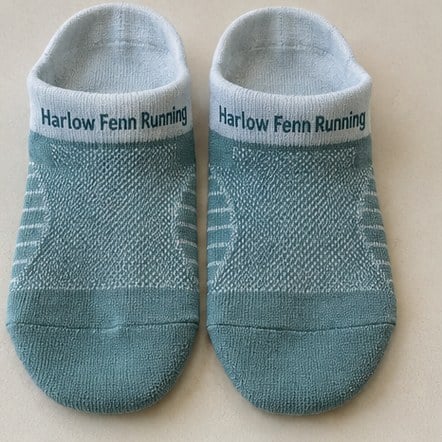
The logo mistakes that make knitted running socks look wrong are thin lines, tiny lettering, gradients and long taglines. A knit logo is built from stitches, not ink, so very fine detail closes up and small text fills in. Send the cleanest, boldest version of your mark and let the mockup show you how it reads at sock scale.
Before you submit artwork, run through these checks:
- Use the simplest version of the logo. Most brands have a stacked or icon-only version that knits far better than the full lockup.
- Drop gradients and drop shadows. Knitting uses solid yarn colors, so blends become stripes or blotches.
- Limit the color count. Every extra yarn color adds complexity. Pick the colors that carry the brand and let the base color do the rest.
- Skip the web address on the cuff. A short word or icon is readable mid-stride; a full URL usually is not.
- Send a vector file if you have one. A clean file shortens the mockup back-and-forth.
Customized Running Socks returns a free mockup within 24 hours and offers unlimited free revisions, so there is no penalty for asking to see a simpler version side by side with the original.
How do you avoid getting the wrong mix of sock sizes?
You avoid the wrong mix of sock sizes by collecting shoe sizes from the actual wearers before you order, rather than estimating from a headcount. Running socks need to fit snugly to prevent bunching and blisters, so a pair that is a size too large is not a harmless spare. It is a pair that creases under the arch on the first long run.
A short survey works well for clubs, teams and companies. Ask for shoe size and, if you are offering more than one style, which style each person wants. Set a clear deadline and send one reminder. For giveaways where you cannot ask in advance, such as race packets or trade-show tables, lean the size mix toward the middle of the range and keep a small reserve of the most common size.
Do not wait for perfect counts before starting the design. The mockup and the size collection can run at the same time, and you can confirm final quantities once the design is approved. The minimum order of 12 pairs applies to the whole order, so a small group can still cover several sizes. For larger groups, the bulk custom running socks guide covers sizing at scale.
What should you check on a running sock mockup before approving it?
Check four things on a running sock mockup before approving it: the logo placement, the yarn colors, the spelling of every word, and the sock style and height. Approving too fast is one of the easiest mistakes to make because the mockup usually looks good at first glance. Read it the way a runner will see the sock: on the foot, from above, while moving.
- Placement. Confirm where the logo sits on the cuff, ankle or top of the foot, and whether it repeats on both sides. On no-show socks, much of the cuff hides inside the shoe.
- Colors. Compare yarn colors against your brand colors and your group’s shoes or kit. Ask for an adjustment if anything clashes.
- Text. Read every letter out loud, including dates, club names and sponsor names. Have a second person check it.
- Style. Confirm the height, cushion and fiber match what you asked for, and that every style in a mixed order is shown.
Revisions are unlimited and free at Customized Running Socks, and you pay nothing until you approve the design. That makes one extra round of changes far cheaper than a box of socks with a typo in the cuff.
Is picking the cheapest fiber a false economy for running socks?
Picking the cheapest fiber is usually a false economy for running socks because cotton-heavy blends hold sweat against the skin, lose their shape and cause blisters. A sock that feels fine at a desk can feel very different an hour into a humid run. Performance fibers wick moisture and hold their fit through repeated washing, which is what keeps the logo in front of people.
The goal of a branded sock is to be worn again and again. If the pair gets retired after one sweaty run, the logo gets retired with it. When you request a quote, describe the conditions your runners face: hot summers, cold mornings, wet trails or long race days. That lets the quote match the build to the use instead of defaulting to whatever is lowest on the list.
Cushion is the other place buyers overcorrect. The thickest sock is not automatically the safest choice. Runners in close-fitting shoes often prefer a thinner knit, while long-distance runners appreciate padding. If your group is mixed, offer both a light and a cushioned option under the same design.
Why does starting late cause problems on custom running sock orders?
Starting late causes problems on custom running sock orders because it squeezes the steps that need people, not machines: size collection, artwork approval and sign-off from sponsors or committees. Production itself is predictable at about 2 weeks after approval. The risk is that a rushed approval locks in a mistake that nobody had time to catch.
Plan the request early enough that the mockup, revisions and size survey can happen without pressure. Customized Running Socks sends the first mockup within 24 hours, so a group that already knows its style, logo and sizes can move quickly. A group that is still debating colors or chasing sizes needs more lead time. Faster turnaround is available with express shipping when a date cannot move, but express shipping does not speed up an internal approval chain.
A useful habit is to name one person who can approve the design. Committees are good at collecting opinions and slow at final answers. Gather feedback on the first mockup, then let the decision maker sign off on the revised version.
What should a first-time buyer include in a running sock quote request?
A first-time buyer should include the sock style, the approximate quantity, the in-hand date, the logo file and a short note about who will wear the socks and where. Those five details let Customized Running Socks recommend the right height, cushion and colors on the first mockup, which cuts down on revisions and avoids most of the mistakes above.
- Style: no-show, quarter-height, trail, double-layer, cushioned marathon or ultralight racing, or ask for a recommendation.
- Quantity: a rough number is fine; the minimum is 12 pairs.
- Date: when the socks must be in hand, not just the event date.
- Artwork: the cleanest logo file you have, plus brand colors.
- Wearers: runners, walkers, staff or customers, and the terrain they cover.
The how it works page shows each step from request to delivery. When you are ready, send the details through the quote form and expect a mockup within 24 hours.
Frequently asked questions
What is the most common mistake on a first custom running sock order?
The most common mistake on a first custom running socks order is choosing a style for its looks rather than for how the group runs. A no-show sock that suits track sessions can slip in trail shoes, while a thick cushioned sock can crowd racing flats. Describe your runners and terrain in the quote request so Customized Running Socks can recommend a height and cushion that people will actually train in.
Why do no-show running socks sometimes slip down inside the shoe?
No-show running socks slip when the shoe collar sits higher than the sock or the size is too large for the foot. The heel pulls out of the sock with each stride and the fabric bunches under the arch. Choosing the correct size and pairing no-show styles with low-cut shoes prevents most slipping. Runners in high-collar shoes are usually happier in quarter-height socks.
What should I look for on a running sock mockup before I approve it?
A running sock mockup should be checked for logo placement, yarn colors, spelling and the correct style and height. Read every word out loud, including dates and sponsor names, and have a second person check it. Compare the colors with your brand and your group's shoes or kit. Revisions are free and unlimited, so asking for one more change costs nothing but a day.
Can a website address or tagline fit on custom running socks?
Custom running socks can carry short words, but a full website address or long tagline rarely reads well on a knitted cuff. Knit stitches cannot hold very small lettering, so long text fills in and becomes hard to read mid-stride. A short word, a handle or an icon works better. Customized Running Socks can mock up both versions side by side so you can compare them before deciding.
Is the thickest cushion the safest choice for a group running sock order?
The thickest cushion is not automatically the safest choice for a group running socks order. Runners in close-fitting racing shoes often find heavy padding crowds the toe box, while marathoners appreciate extra cushion on long runs. If your group trains in different shoes and distances, offering a light option and a cushioned option under the same design keeps everyone comfortable and makes the socks more likely to be worn.
Can sizes be swapped after custom running socks have been knitted?
Custom running socks cannot be resized once they are knitted, because the logo and fit are built into the sock during production. That is why sizes should be confirmed before the order goes into production, not afterward. Collect shoe sizes from wearers with a short survey and a firm deadline, and keep a small reserve of the most common size for latecomers or new members.
What information should go into a first custom running sock quote request?
A first custom running socks quote request should include the style you want, a rough quantity, the date the socks must be in hand, your logo file and a note about who will wear them. Customized Running Socks uses those details to recommend height, cushion and colors on the first mockup, which arrives within 24 hours. A rough quantity is fine; the minimum is 12 pairs.
How many design revisions come with a custom running sock order?
Design revisions on a custom running socks order are unlimited and free. You can adjust colors, logo size, placement or wording as many times as needed until the mockup looks right. Each revised mockup comes back quickly, so changes rarely slow an order down. Production starts only after you approve the final design, which means every revision happens before any socks are knitted.
Do I pay anything before approving a custom running sock design?
Custom running socks from Customized Running Socks require no payment until you approve the design. The quote and the first mockup are free, and the mockup usually arrives within 24 hours of your request. That gives you room to compare styles, test a simpler logo and collect sizes without committing to anything. Payment and production begin only after the final design is signed off.
Should a first custom running sock order use every brand color available?
A first custom running socks order rarely needs every brand color. Knitted designs use solid yarn colors, and each extra color adds complexity without always improving the look at sock scale. Choose the two or three colors that make the brand recognizable and let the base color carry the rest. A simpler palette usually knits cleaner and reads better from a distance.
Which custom running socks suit runners who train through hot summers?
Custom running socks for hot-weather training work best in a thin, breathable performance knit, such as ultralight racing or quarter-height styles. Lighter socks release heat and moisture faster than heavily cushioned pairs, which helps prevent hot spots on humid runs. Avoid cotton-heavy blends, which hold sweat against the skin. Mention summer training in your quote request so the recommendation matches the conditions.
Get a free mockup for your running socks
Send your logo or idea and the quantity you have in mind. Customized Running Socks returns a free mockup within 24 hours, you approve the design before anything is produced, and standard turnaround is about two weeks with faster options available. Get a custom quote.